Every image model asks you to describe a look in words. That works exactly once. The second time you write "soft window light, muted film grain, slight cyan in the shadows", you get a cousin of the first image — close enough to recognise, far enough to break a set.
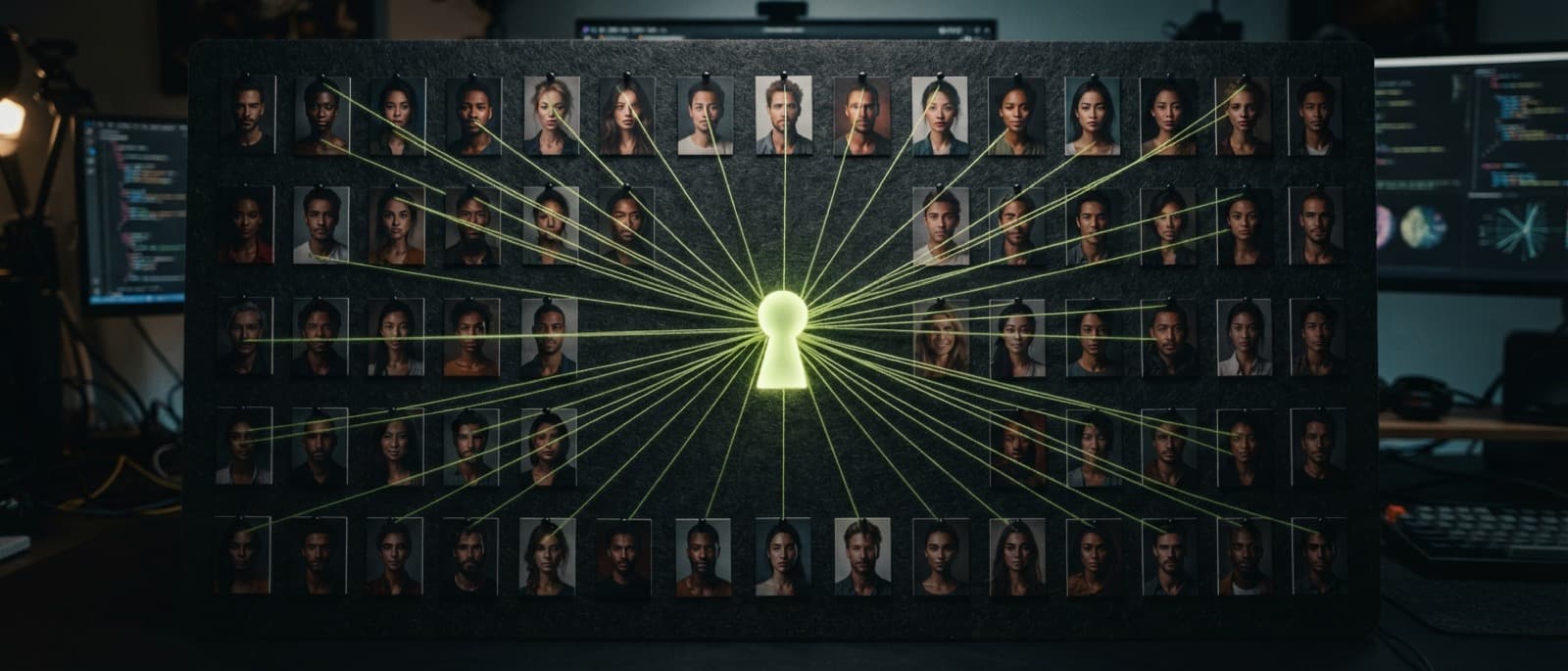
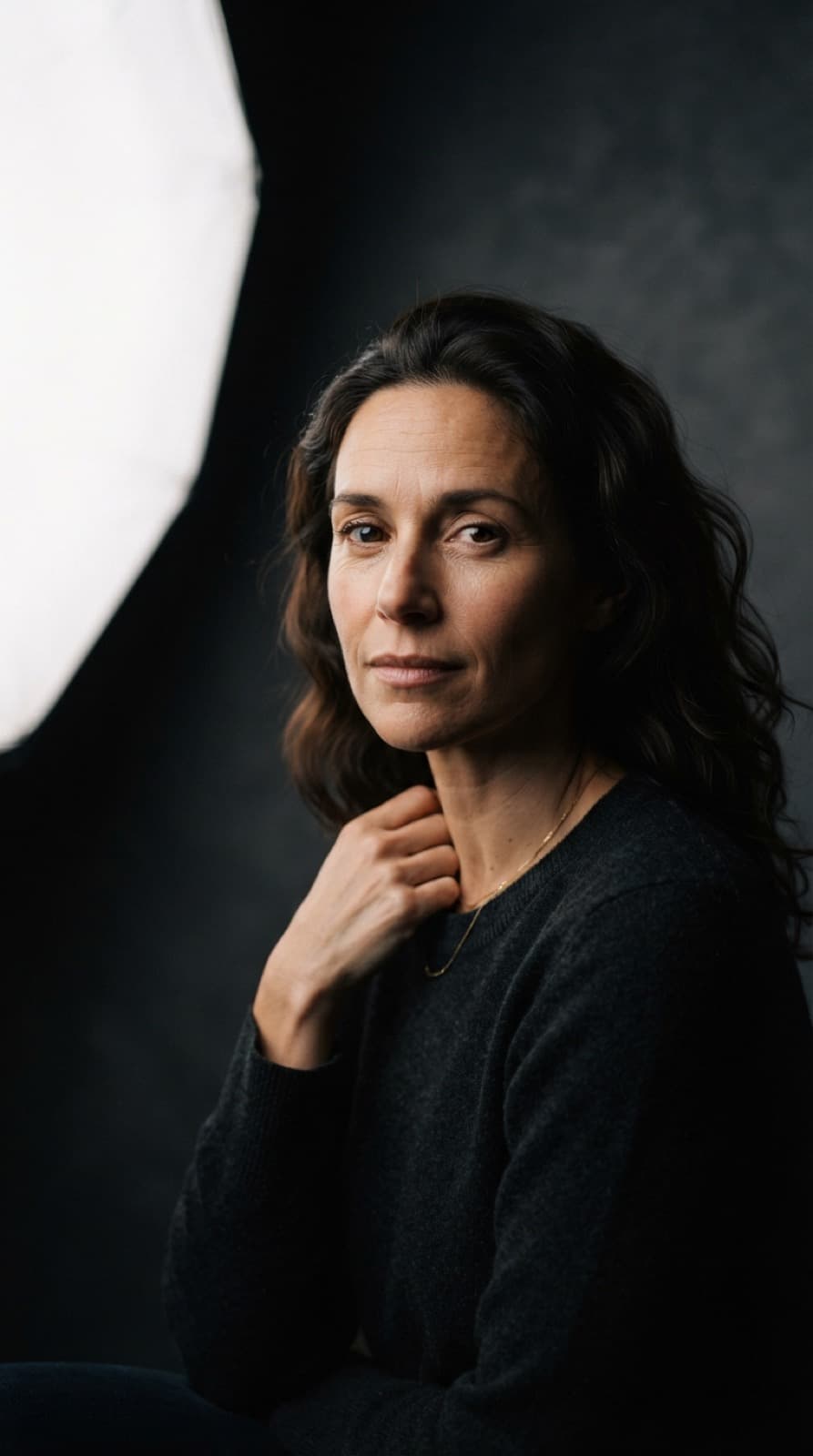
A character key is our answer. You describe her face and build in one compact paragraph, once, and reuse that key by name for as long as you want. The look she was shot in sits in a second, optional paragraph on the same key — so you can keep her and change the light. No prompt archaeology, no copying sentences between projects.
The prompt problem
Prompts are lossy in a specific way: they encode intent, not measurement. "Warm" covers a wide range of colour temperatures. The model resolves that ambiguity differently every run, and the variance lands in precisely the places a human eye is trained to notice — skin tone, falloff, the colour of a shadow.
You can see it for yourself in a minute: run one prompt twice on the same model and put the results side by side. They will usually read as the same idea and a different shoot. Rewording the prompt between shots makes it worse.
A prompt describes what you wanted this time. A key describes what should be true every time.
— internal design note
What a key stores
A key is one envelope with two paragraphs. The subject paragraph says who it is. The style paragraph says how it was shot — plain language, short enough to read at a glance and rewrite in place. You write both, and both are editable word by word. A good style paragraph covers five families of signal:
Light — Direction, hardness, and the ratio between key and fill.
Colour — White point, saturation, and the hue that lives in the shadows.
Optics — Focal compression, depth of field, and how highlights bloom.
Texture — Grain and the amount of micro-contrast on skin.
Framing — Typical subject scale and where the horizon tends to sit.
Alongside the two paragraphs sit a short list of exclusions — things the key should never produce, also written by you — an optional starter line that fills the prompt box when you attach the key, and up to six pinned reference images. The references are there for you to check the words against; what goes to the model is the text.
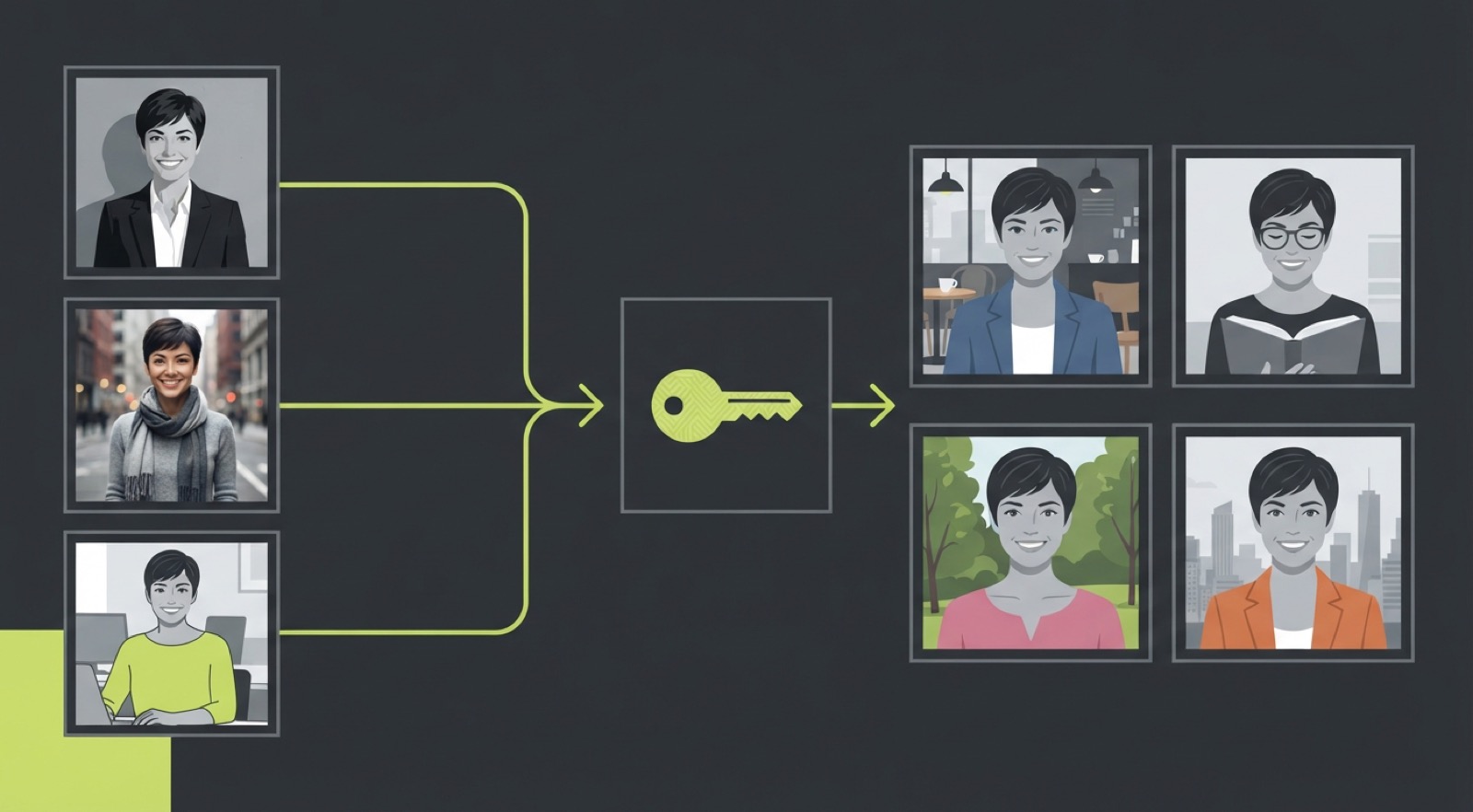
Fig. 1 — three references pinned to one key, and four shots made with it. The words carry the character; the setting changes per shot.
What it forgets on purpose
A key that described everything would be a copy of one image. So the style paragraph leaves out subject identity, pose, background content and any recognisable object — those live in the subject paragraph, in the prompt for this shot, or nowhere at all. That split is what lets one key's look light a bowl of fruit without turning the fruit into a face.
It also means a key is something you can read. There is no hidden embedding and no model trained on your character — just the words you wrote, placed in front of whatever you type for this shot and sent to the model you picked.
Drift across a series
A key narrows the variance; it does not remove it. Every render still goes to a third-party image model, and those models do not promise identical output twice. What a key gives you is the same description on every shot, so the differences come from the model rather than from you rewording the brief.
When one result is right, use Continue from this. The next turn starts from that render with the same key and the same model, and the thread keeps the link between the two — so a series grows from the frame you liked instead of from scratch.
2 — paragraphs in a key: who it is, and how it was shot
6 — reference images you can pin to one key
0 — credits to make or edit a key
Using keys across shots
Keys are called by name. Attach one to a thread and every turn in it starts from that key; swap in a different key for a single shot whenever you need to.
A key is copied into the shot, not linked to it. Every turn stores the full prompt it was sent, so editing a key later leaves everything already made untouched — each image already carries the recipe that made it.
Character keys are available on every plan, including the free one, and they are private to your account. If you have an OC you keep rebuilding by hand, that is the first thing worth turning into a key.